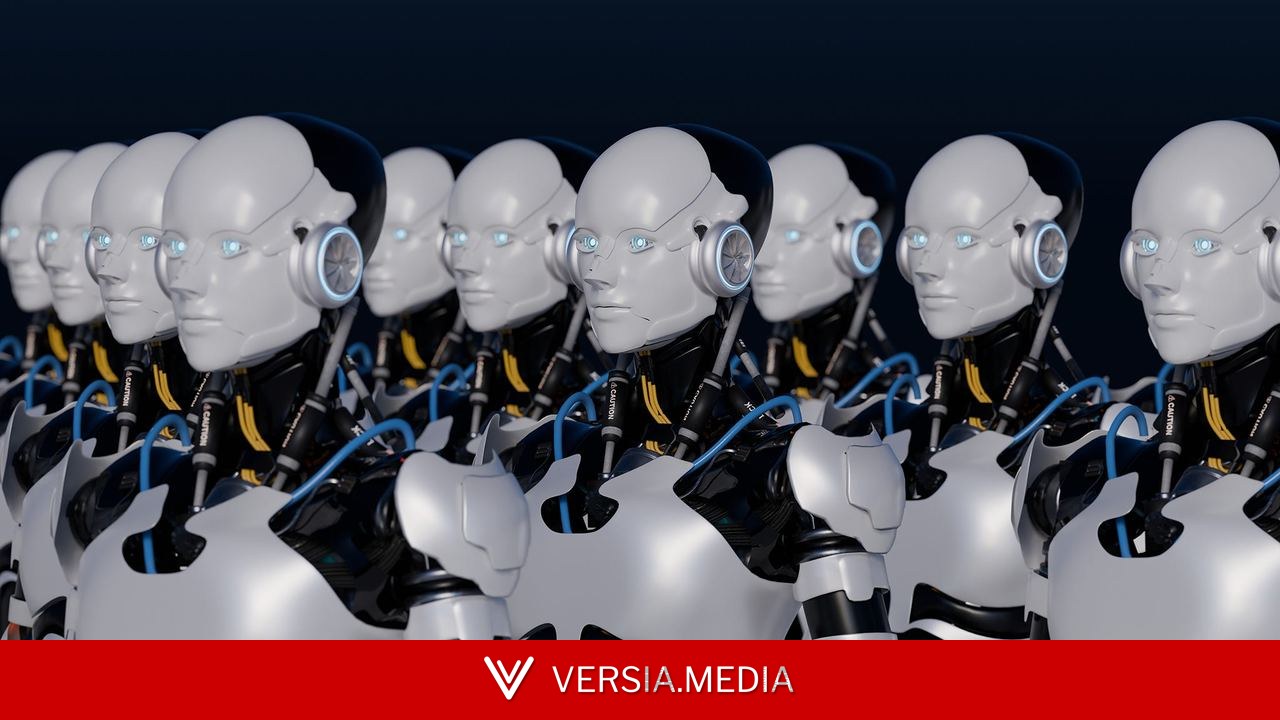
Automakers are betting billions on humanoid robots. We explain why that matters long before Rosie the Robot lands at home.
You can now buy your own humanoid robot and make your own videos of it doing backflips and such. Chinese startup UniTree was founded in 2016 by Wang Xingxing, who’d built a quadruped robot called XDog as his master’s thesis at Shanghai University. It made such a splash that he quit a job at drone-maker DJI and founded UniTree to perfect quadruped robots .
0:00 / 0:00
Why should MotorTrend (and you, the car-enthusiast) care anything at all about robots? Up to now, cars have typically been the second priciest product Americans buy. They’re expensive, practical, alluring, and sometimes dangerous. Robots have many of those attributes in common, and lots of car companies are investing millions in building humanoid robots.
Tesla Optimus humanoid robot
Most are making that investment primarily to help them build your next car, but you just know Elon Musk will be more than happy to sell an Optimus robot to do your bidding. You’ve trusted MotorTrend to give you the inside scoop on cars for 77 years, so who better to keep you up to speed on the emerging humanoid robot market—some nerds at an electronics mag?
UniTree G1 Humanoid Robot
The First Affordable Commercial Humanoid Robot
UniTree offered a range of research and industrial quadruped robots from 2017 to 2020 before offering the Go1 and Go2 consumer-grade models starting in 2021, priced in the $1,600–$3,000 range. The G1 biped humanoid robot is a natural extension of this product. It stands 4 feet 2 inches tall, weighs just under 80 pounds, can walk at about 4.5 mph, climb stairs, perceive its environment with available lidar and RGB cameras, and perform backflips. Battery life is about 2 hours—less with continuous manipulation.