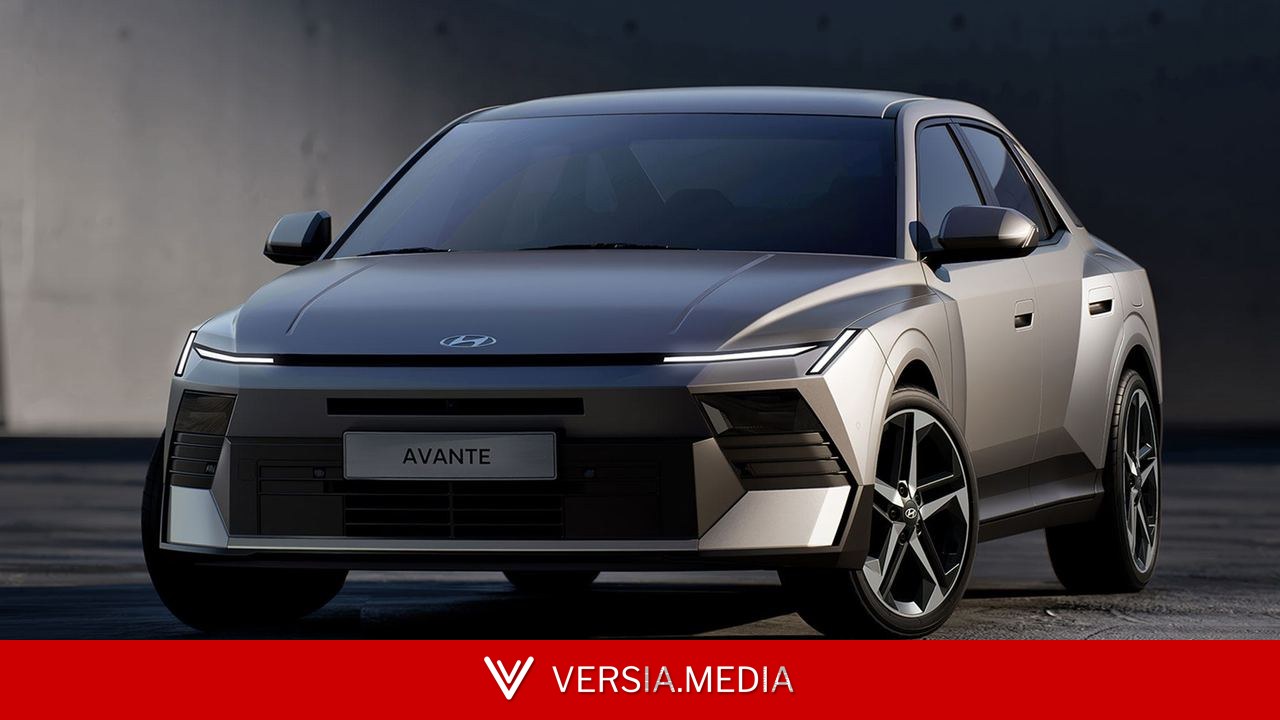
2027 Hyundai Elantra Expert Review
Reviewed by Bob Hernandez
Despite having one of the least expensive MSRPs of any new car sold today, the Hyundai Elantra has evolved from basic transportation into a style-conscious, feature-rich Civic and Corolla fighter. The 2027 Elantra’s expected redesign appears aimed at making it feel less like a budget alternative and more like a segment benchmark.
The 2027 model looks set to become a more tech-forward, spacious sedan, with Hyundai pushing its small car closer to midsize territory while layering in AI-based infotainment and more advanced driver-assist features.
Compact sedan competitors include the Honda Civic, Toyota Corolla, and Kia K4.
Hyundai has previewed the next-generation Avante, the Korean-market version of the Elantra, giving us an early look at what may be coming for the compact sedan. Though we have yet to receive confirmed info for the U.S. market, Hyundai says more complete information will be released later this year.
The eighth-generation Elantra/Avante, the first full redesign since the 2020 model
Hybrid powertrain updates
Expanded driver-assist technology
Larger footprint
Sharper surfacing, more pronounced fenders, and sportier proportions
Slim LED front lighting
New exterior colors include Kodiak Blue Matte, Raptor Gray Matte, and Graphene Green Pearl. This is for the Korean market, but we may get one or two of these for the 2027 Elantra’s launch year, before they’re discontinued for non-matte options.
Revised cabin
New infotainment architecture
Generative AI assistant
New interior colors on the Korean model include Cognac, Ivory Rose, and Chalk Beige. Expect at least one of these to make it to the U.S. model, though most will likely still feature a black interior.
This page will be updated with more insights and photos as information becomes available.
The current Elantra is already one of the smarter buys in the class, and the redesigned Korean-market Avante suggests Hyundai may be preparing to double down on the things that make the Elantra work. If this is the 2027 or 2028 U.S.-market Elantra, the formula looks familiar but more ambitious: sharp design, strong value, excellent safety content, and hybrid efficiency.
The biggest opportunity is refinement. Today’s Elantra can feel less polished than a Honda Civic, especially in base-engine performance and cabin materials. A larger footprint, more upscale interior, bigger screens, expanded driver-assist tech, and updated hybrid hardware could help close that gap while preserving the Elantra’s value advantage.
Pricing will matter, and U.S. specs are still unconfirmed, but the redesigned Elantra appears aimed at making Hyundai’s compact sedan feel less like the smart budget pick and more like a true class leader. Considering we now prefer the 2027 Elantra’s mechanical cousin—the Kia K4—over the non-hybrid Honda Civic, the Hyundai could just be the next compact sedan to watch.
Based on Korean-market Avante information, the redesigned 2027 Elantra does not appear to dramatically change the performance formula. Hyundai lists a 2.0-liter gas engine producing about 147 hp and paired with an CVT automatic, plus a 1.6-liter hybrid with optimized transmission hardware, improved electric-motor output, and a larger battery.
Hybrid system output is listed at about 155 hp, up from the current U.S.-market Elantra Hybrid’s 139 hp and 195 lb-ft of torque, though Hyundai has not released torque figures for the redesigned model or confirmed U.S. specs.
For context, the 2026 Elantra’s 147-hp, 132-lb-ft 2.0-liter gas engine reached 60 mph in 8.4 seconds in MotorTrend testing, whereas the 139-hp hybrid took 8.7 seconds.
Even with the hybrid’s apparent power bump, the redesigned Elantra will likely remain more efficiency-focused than sporty. The same is true for the non-hybrid model; don’t expect MotorTrend-tested acceleration to change much.
Performance variants could change the picture, but Hyundai hasn’t yet detailed redesigned N Line or N models. For reference, the 2026 Elantra N Line uses a 1.6-liter turbo-four making 201 hp and 195 lb-ft of torque, good for a 7.0-second 0-60 mph time. The full Elantra N is much quicker, with a 2.0-liter turbo-four producing 276 hp—or up to 286 hp in short bursts—and 289 lb-ft.
In MotorTrend testing, the Elantra N reached 60 mph in 5.5 seconds with the manual and 4.7 seconds with the automatic.
MPGs and Range
If the Korean-market powertrain information carries over, fuel economy for the redesigned Elantra’s 2.0-liter gas model seems unlikely to change much. For 2026, gas 2.0-liter Elantra models return 30-31/40 mpg city/highway depending on trim, with an estimated range of 422-434 miles. These are solid numbers, though not class-leading.
The hybrid could see meaningful efficiency gains. Hyundai says the updated hybrid system uses optimized transmission hardware, improved electric-motor output, and a larger battery, while next-gen regenerative braking can adjust regen based on traffic flow and navigation data and help slow the car to a stop. A predictive energy-management system also analyzes the route and road conditions to optimize battery charge for real-world fuel economy.
For reference, the 2026 Elantra Hybrid is rated at 51/58 mpg and 594 miles of range in Blue trim, or 49/52 mpg and 550 miles in other hybrid trims. That already compares well with the Honda Civic Hybrid sedan at 50/47 mpg and 519 miles of range and the Toyota Corolla Hybrid at 53/46 mpg and 565 miles for most trims.
We’re bigger fans of the Honda Civic Hybrid than the outgoing Elantra Hybrid, so we’re curious if Hyundai can retain high mileage and range while improving the driving experience.
The redesigned 2027 Elantra appears set to build on the current car’s already strong safety-tech roster. Hyundai claims two brand-first features for the Korean-market Avante: Navigation-based Smart Cruise Control 2 and SBW P-position emergency braking.
NSCC 2 can automatically slow the vehicle for speed zones, speed bumps, intersections, and other mapped areas on general roads as well as highways, then return to the set speed afterward. The SBW P-position emergency braking system allows the driver to press the electronic shifter’s P button in an emergency to limit acceleration and bring the car to a stop.
Hyundai also adds Pedal Misapplication Safety Assist, which can limit drive force and apply braking if the accelerator is mistakenly pressed instead of the brake at low speeds or from a stop. U.S.-market content has not been confirmed, but returning standard and available features are expected to include:
Front and rear automatic emergency braking
Lane keep assist
Blind-spot monitoring and camera view
Side cross-traffic alert
Automatic high-beams
Safe exit warning
Traffic sign recognition
Lane centering
Parking sensors
360-degree camera
As for safety testing, we expect the 2027 Hyundai Elantra to earn one of the two IIHS safety awards. The outgoing car already does, and the Kia K4 (which shares mechanical bits with the Elantra) has the best award IIHS offers for 2026.
How Big Is the 2027 Elantra?
The redesigned Elantra boasts a noticeably larger footprint. Hyundai lists it at 187.6 inches long, 73.0 inches wide, and 56.1 inches tall, with a 108.3-inch wheelbase. That makes it 2.2 inches longer and 1.2 inches wider than before, with 1.2 inches added between the wheels. Keep in mind these numbers may change slightly for the U.S.-spec model.
Those dimensions move the Elantra closer to Hyundai Sonata territory, though the midsize sedan remains the larger car. Compared with the Sonata, the redesigned Elantra is 5.7 inches shorter overall and has 3.5 inches less wheelbase, but it is nearly as wide and almost as tall.
Interior packaging for the redesigned Elantra remains unknown. For reference, the 2026 Elantra offers 42.3 inches of front legroom, 38.0 inches of rear legroom, and 14.2 cubic feet of trunk space, giving the current compact sedan useful passenger and cargo room even before the redesign.
The redesigned Elantra could bring one of the car’s biggest tech upgrades. Hyundai says the Korean-market Avante will offer either a 14.6-inch or 12.9-inch center display, depending on configuration, a major step up from the current Elantra’s 8.0-inch and available 10.3-inch touchscreens. Encouragingly, Hyundai appears to be keeping some physical controls rather than moving everything into the screen.
The new system is called Pleos Connect and is based on an Android Auto OS. Hyundai has not said how that will affect Apple CarPlay , but we expect smartphone mirroring to remain part of the package.
The system also adds Gleo AI, a generative-AI assistant designed for more natural voice interaction, vehicle controls, knowledge search, trip recommendations, and conversational assistance. A Pleos App Market could bring downloadable in-car apps for streaming, music, and games. Will these features make it to the 2027 Elantra in the U.S.? Some of them may, especially on higher trims.
Previously Hyundai offered either a six-speaker base system or an eight-speaker Bose premium arrangement with higher-end trims. A new Bang & Olufsen high-end setup could be coming with the redesigned model.
Upgrades appear to build on the current Elantra’s feature set. Hyundai lists an integrated dashcam, over-the-air updates, a phone-based digital key, walk-away locking, dual wireless phone charging, and 100W fast-charging USB ports for both rows.
What's Your Car Worth?
MotorTrend calculates your car's value in three free and easy steps - using the same Black Book® data dealers use to appraise vehicles.
Get My Trade-In Value
The Elantra has traditionally been one of the stronger values in the compact-sedan segment, and the 2026 model remains a good benchmark for judging the redesigned car. Today’s Elantra offers competitive fuel economy (especially as a hybrid), lots of standard safety tech, and a strong feature-per-dollar equation against rivals like the Honda Civic and Toyota Corolla.
A redesigned model will almost certainly cost more, especially if Hyundai brings over the larger body, upgraded displays, expanded driver-assist tech, and new convenience features previewed by the Korean-market Avante.
Still, because this is a compact sedan, the increase should have limits. The key question is whether Hyundai can preserve the Elantra’s value advantage while moving the car closer to midsize territory in size and technology.