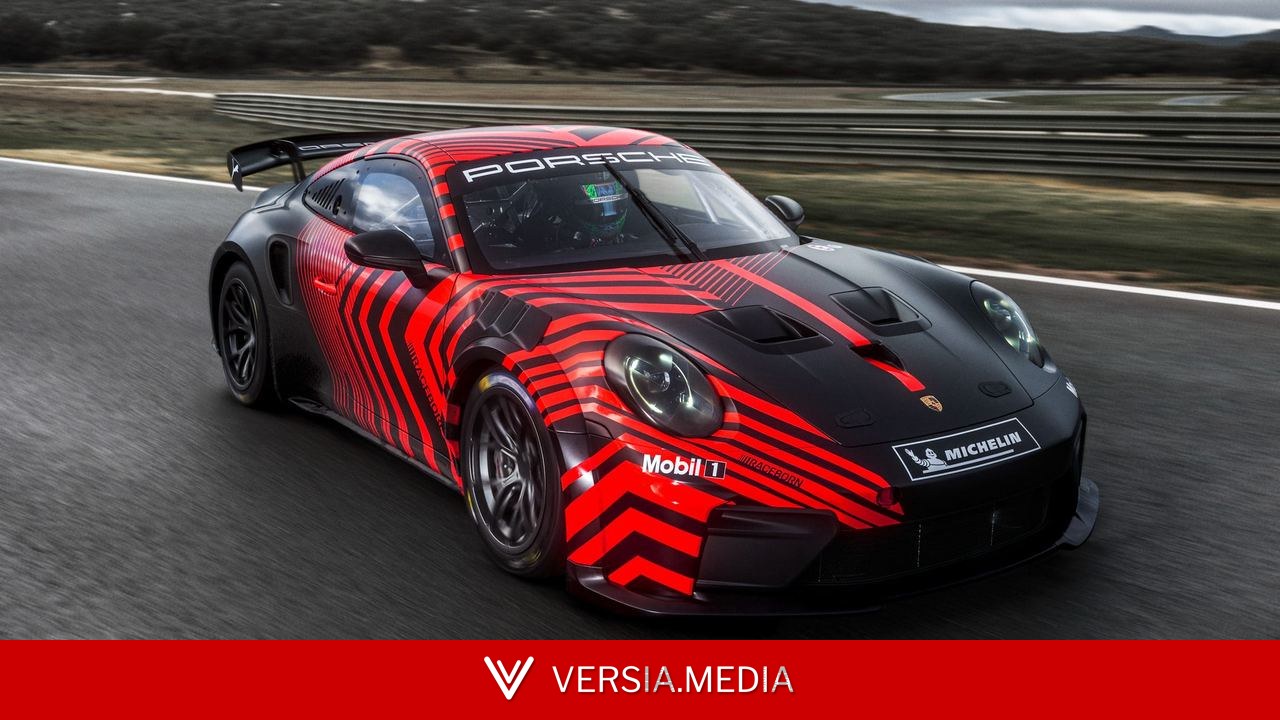
The 992.2 GT4 R replaces the discontinued 718 GT4 RS Clubsport as the factory’s entry-level racer.
See All 12 Photos 12
With the end of the Porsche 718 as a gas-powered sports car , the GT4 RS Clubsport, its race car counterpart, was logically also on the way out. As the car aimed at up-and-coming drivers racing in feeder series around the world that use the GT4 formula, the mid-engine 718 served as a steppingstone to a ride in the 911 GT3 R in IMSA, GT America, and other professional sports car series. Now, the leap from GT4 to GT3 should feel a bit more familiar as Porsche introduces the 2027 911 GT4 R, the 992.2-based replacement for the 718 GT4 RS Clubsport.
0:00 / 0:00
Why Does Porsche Need a GT4-Spec 911?
Although it is a new race car from Porsche, the 2027 911 GT4 R is based on the existing 992.2 911 Cup car . The latter model already competes in Porsche-sanctioned one-make series such as Porsche Carrera Cup North America and Porsche Sprint Challenge North America. This also means support and setup knowledge for the new 992.2 GT4 race car will already be largely established, and drivers in IMSA’s Michelin Pilot Challenge Grand Sport class and SRO GT4 America should be able to get up to speed, no pun intended, rather quickly.
The other advantage is that drivers who want to stay in a Porsche while moving from GT4 to GT3 might find it to be a more natural transition. The driving style between a mid-engine 718 GT4 and a rear-engine 911 GT3 is quite different because of the difference in the cars’ weight balance. That should make the jump from the Grand Sport feeder class to the professional GTD class in the IMSA WeatherTech SportsCar Championship a little less daunting, aside from the increase in power and grip.
Same Engine, More Power
Indeed, power and grip separate all the cars mentioned in this story, aside from engine placement. Although all the Porsche race cars mentioned here use the legendary six-cylinder flat-six, the outgoing 718 GT4 produced around 500 horsepower when its 4.0-liter engine was unrestricted. The 992.2 911 GT4 R bumps that to 520 hp from the same 4.0-liter displacement; this might make the jump to the GT3 R’s 565-hp, 4.2-liter engine just a tiny bit easier.
Again, those are unrestricted numbers, and most series require some sort of restrictor as part of balance of performance parity among the different makes in each class. The supplied 2.11-inch (53.7mm) restrictor from Porsche, for example, chokes the peak output to 430 hp. Even so, that is still a 5-hp bump over the 718 GT4 with a similar restriction.
Roadholding comes from a combination of aerodynamics and the mechanical grip the chassis provides. It all begins with the tires, and even though each series will specify its own tire manufacturer, the 911 GT4 arrives with an advantage over the outgoing 718 GT4.
The mid-engine Porsche race car made do with 18x9-inch front wheels and 18x10.35-inch rears. Those might sound like great sizes for a street car, but they are narrow for a race car. The new 992.2 911 GT4 R comes with 18x11 front and 18x12 rear wheels. Of course, both GT4s pale in comparison to the monsters fitted to the 911 GT3 R, which uses 18x12.5 front tires and 18x13 rears.
The GT3 also has an advantage when it comes to wheel and tire changes, as it uses center-lock forged aluminum wheels, while the GT4 version remains saddled with five-lug forged aluminum units.
Just behind those five-lug wheels, the 911 GT4 R features six-piston front and four-piston rear monobloc aluminum calipers clamping two-piece rotors. Both axles use 15-inch (380mm) steel discs mounted to aluminum hats, but the fronts are 1.38 inches (35mm) thick and the rears are 1.26 inches (32mm). Although both street and race cars use ABS to modulate braking pressure, the GT4 gets the latest Bosch motorsports system, which can be adjusted to the driver’s preference for lockup.