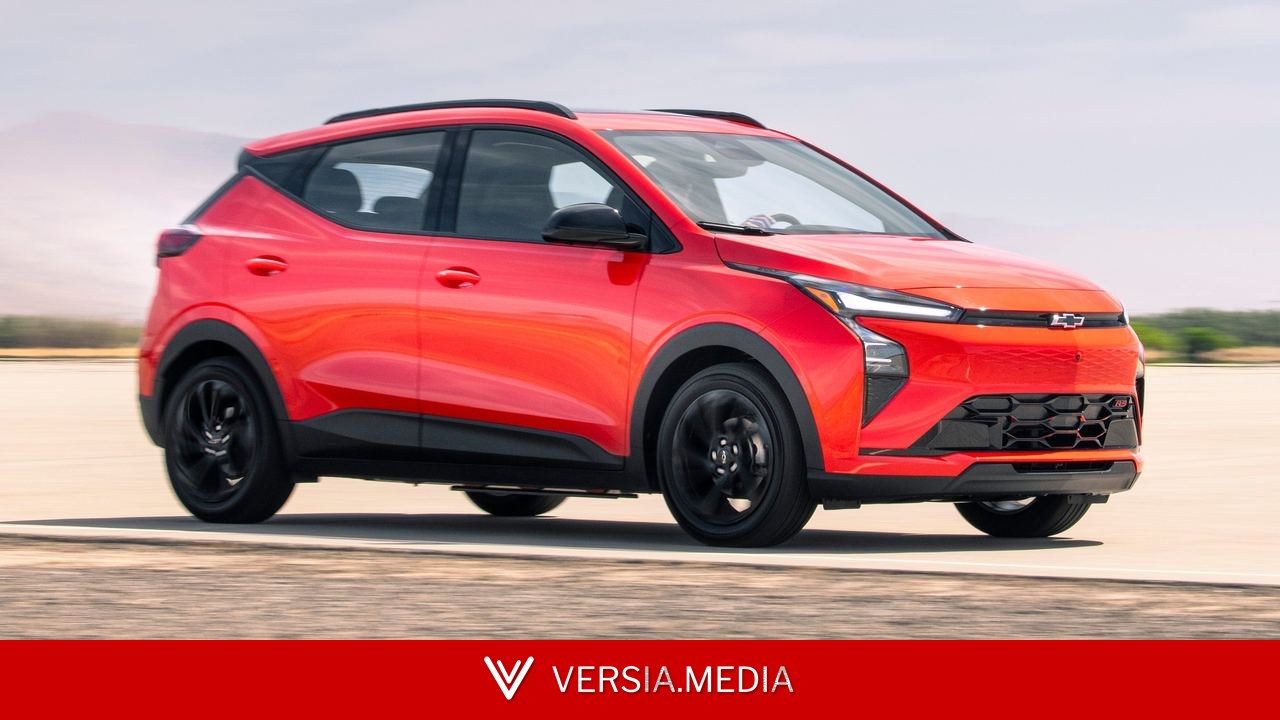
The revived Bolt isn’t the breakthrough we hoped for, but its value is hard to ignore.
See All 25 Photos 25
Improved charging hardware
Firm brake pedal
Strong value
Busy, noisy ride
Overly aggressive regen tuning
Limited highway range
When the Chevrolet Bolt EV first arrived roughly a decade ago, it was celebrated for making longish-range electric driving feel attainable. Our first impressions also found a car with a feisty 200-hp motor, useful one-pedal capability, and an overall ride that benefitted from planting a heavy battery low in a short, tall body. It was quick without being exotic, practical without being joyless, and game changing enough to be named our 2017 Car of the Year.
0:00 / 0:00
That personality endured as the Bolt aged, and the lineup added a larger Bolt EUV sibling. The bargain kept getting better, and its eager, efficient, and slightly unpolished nature stayed familiar, until it was discontinued after the 2023 model year. Now the Bolt is back—sort of. The 2027 model is essentially a revised Bolt EUV that Chevrolet currently only plans to produce in a limited run as opposed to embarking on a long-haul nameplate revival. That makes this First Test feel less like an in-depth examination and more like a closing argument.
See All 25 Photos 25
Less Torque but Just as Quick
At 210 horsepower, the front-motor-only Bolt makes a smidge more horsepower than the old Bolt EV and EUV, but it loses a massive chunk of torque at only 169 lb-ft—almost 100 lb-ft less than the last models. That trade-off is noticeable when you hit the accelerator from a stop. Whereas earlier Bolts had that familiar EV snap right off the line, the 2027 Bolt RS we tested eases into motion more deliberately, even in Sport mode. Tour and Sport modes delivered essentially the same straight-line performance at 6.7 seconds from 0 to 60 mph, and our quickest launch required a little pedal overlap to wake everything up.
Once rolling, though, the new car settles into a familiar rhythm. It feels quick enough to navigate normal traffic, on-ramps, and everyday commuting, and despite being the heaviest Bolt we’ve tested, its new drive unit mostly cancels out the extra weight and lower torque. The result is a car that posted the exact 60 mph number as a previous Bolt EUV we tested and lands only a beat behind the lighter Bolt EVs. It also stays competitive with the latest Nissan Leaf, which offers more torque but also weighs substantially more. Less punchy? Yes. Slower by the stopwatch? Not really.