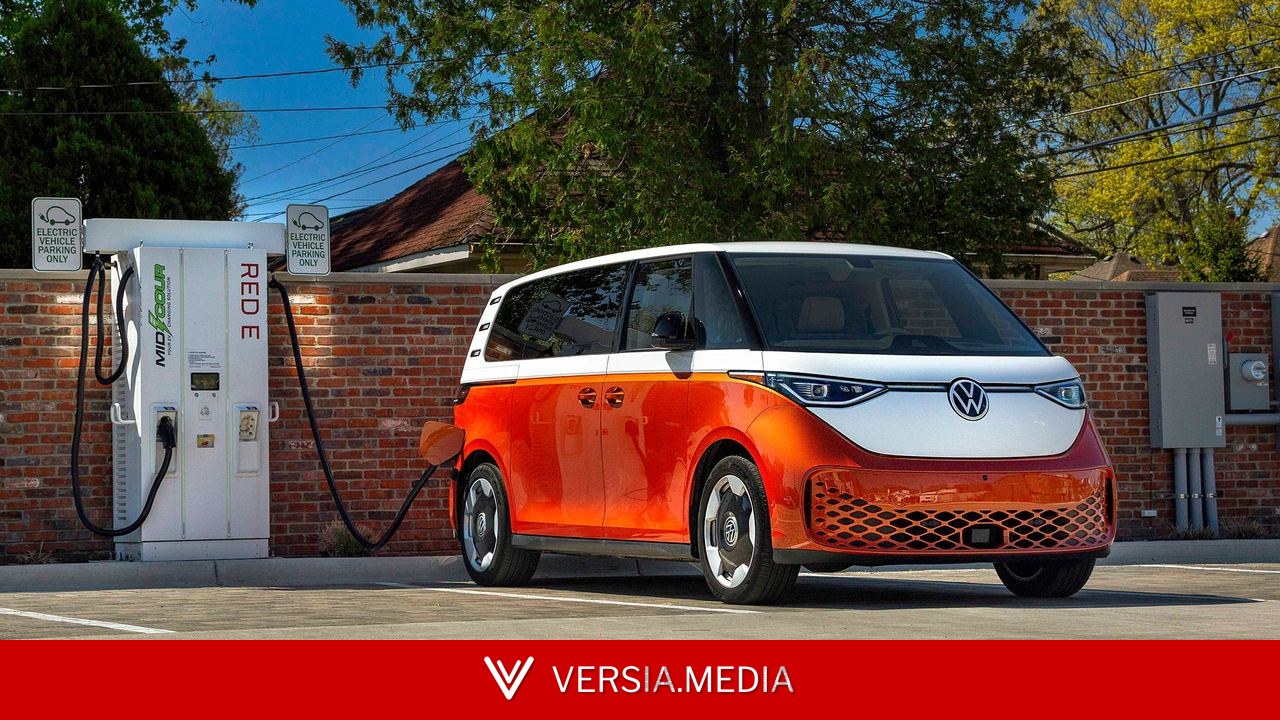
Might this electric minivan’s almost universally adored styling excuse its unimpressive electric practicality?
See All 40 Photos 40
When filling out official questionnaires, consumers are about as unlikely to rank styling or design as a top of SUV/van-purchase priority as you are to confess having chosen your mate based on their looks alone. Allowing aesthetics to outweigh practical, objective factors in major life decisions seems unconsidered, shallow, ill-advised. Volkswagen seems to doubt this truism.
0:00 / 0:00
The 2025 Volkswagen ID Buzz is a vehicle so objectively cute, cool, and iconic in its design that it blatantly dares buyers to ignore practical considerations like price, range, charging speed, and passenger/cargo space flexibility. And yet, here we are in mid-2026 launching a year-long test with an unsold 2025 Buzz. (The model sat out the ’26 model year and will return shortly for 2027.) Danged if it hasn’t bewitched us to the point that one of our staff’s biggest EV long-trip range-whiners didn’t just return from a long trip smiling. Will the new wear off and the extended travel times change that over the course of a year? Stay tuned to find out.
See All 40 Photos 40
Despite the model-year tardiness, we specced our ID Buzz exactly as we wanted it: in Candy White over Energetic Orange ($995) with a Dune bench-second-row interior (its standard Creamsicle accents pair best with the orange exterior). The most affordable way to get that combo in 2025 was on the midgrade Pro S Plus trim (a $3,500 upgrade) with rear-wheel drive. The rear motor best apes the OG bus and was the only powertrain offered with the seven-passenger seating (the middle bench better suits our pets, and it’ll reduce our temptation to ever squeeze a third unbelted kid into the way-back).
Our biggest splurge was the $1,495 electrochromic panoramic roof. We already know the milky-white translucent setting in this polymer-dispersed liquid crystal (PDLC) setup can’t match an opaque shade for brightness, but how well does it reduce heat gain? We’ll let you know. The rest was accessorizing: $479 bought roof-rack crossbars (still to be DIY-installed), a charging cable capable of plugging into 120- or 240-volt outlets ($360), cool vintage Chilewich-look floormats ($300), plus other niceties that brought the total to $69,109.
See All 40 Photos 40
We’ve put the Buzz through our full test regimen and found it to perform almost identically to the one tested during our 2025 Car of the Year program (no surprise, as it weighs only 55 pounds more). It ended up falling 15 miles short of our other rear-driver in our Road-Trip Range test (213 vs. 228 miles, or 9 percent below the 234-mile EPA rating). Those are very low numbers in a vehicle segment optimized for family vacationing.
Worse yet, its 400-volt electrical architecture is only rated to charge at a maximum of 200 kW. But in our charging test, this one maxed at 204 kW—well up from the 175 we drew in our next-best-charging Buzz, with both drawing from 350-kW Electrify America towers. That helped charge back to 100 percent in 45 minutes—about 15 minutes quicker than any previous Buzz. And its first 15 minutes of charging added 112 miles—20 percent more than our next-best-charging ID Buzz 4Motion . Energetic Orange for the win? Charging system built on a Wednesday?