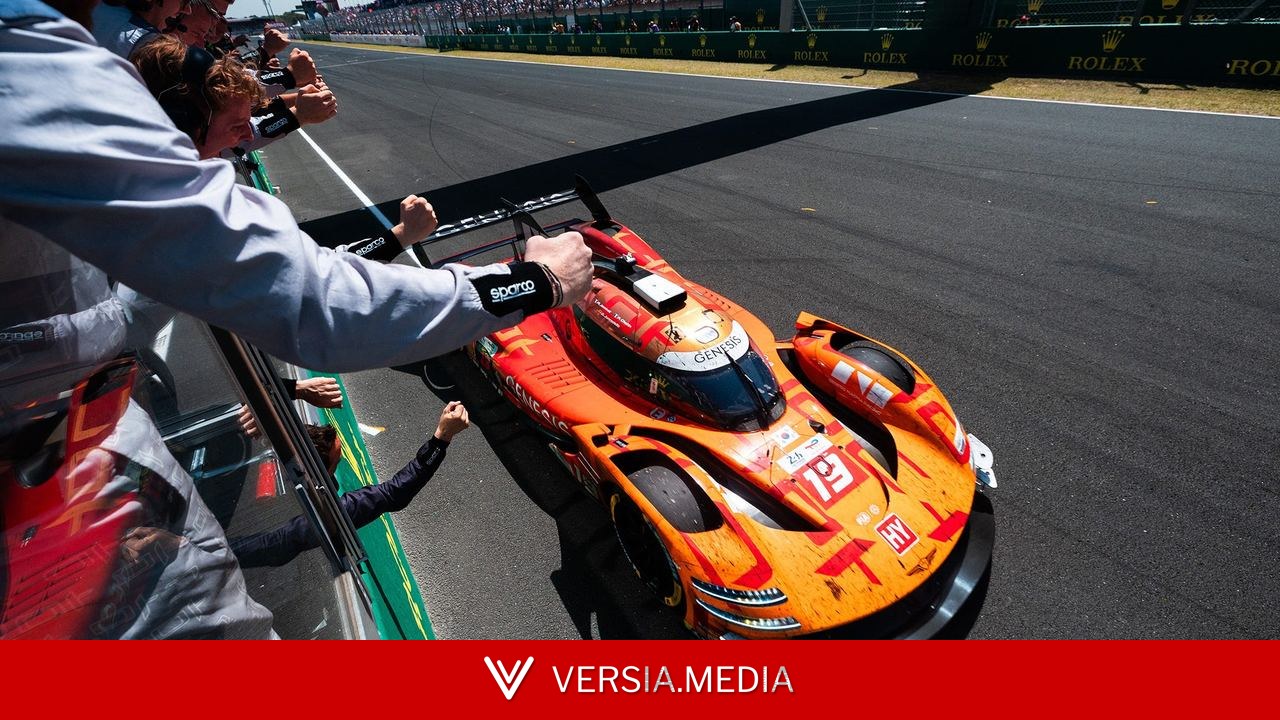
Genesis Magma Racing Took on the 24 Hours of Le Mans in only its third start and was (mostly) happy to finish the race.
See All 9 Photos 9
There’s nowhere to hide in racing, at times a brutal competition that decades ago inspired the aphorism, “When the green flag drops, the bullshit stops.” For Genesis Magma Racing, the new factory-backed FIA World Endurance Championship team, first announced just a year and a half ago , the 2026 24 Hours of Le Mans contested over this past weekend was always going to be a learning experience more than a quest for a podium finish, let alone a win.
0:00 / 0:00
Genesis as a whole faced the immense challenge with nary a hint of trepidation. On the Friday before the race, there was José Muńoz, Hyundai Motor Co. president and CEO—and MotorTrend ’s 2025 Person of the Year —along with other top Genesis executives addressing more than 100 global media members and invited guests inside the brand’s luxurious three-story hospitality unit overlooking Circuit de la Sarthe’s Ford and Raccordement Motul chicanes. The overarching message: Hyundai and Genesis are on a roll in the marketplace, with Genesis selling 50,000 new vehicles in the first quarter of 2026; total Q1 global revenue of $31 billion across the company; record year-to-date sales growth of 8.5 percent in North America and Europe; sales records for Genesis models like the G70, GV70, and GV80; and a resultant stock valuation of more than 200 percent gain. And those were just the main highlights.
See All 9 Photos 9
Still, there are plenty of people around the world who don’t know what Genesis is, let alone its Magma performance arm. So the brand’s entry onto the world’s biggest sports car racing stage with its Genesis Magma Racing GMR-001 Le Mans Hypercar (it runs to LMDh specifications, which are a bit simpler and cheaper than the LMH class it goes head to head with in races) is meant to boost that awareness. The racing program just “happens” to coincide with Genesis’ push into more European markets, including France (home of Le Mans), Italy, the Netherlands, and Spain. (A planned IMSA WeatherTech SportsCar Championship campaign in North America, intended originally for 2027, has been pushed back to at least 2028; team principal Cyril Abiteboul said at Le Mans a decision in that regard could be made around the time of the WEC’s Austin, Texas, round later this year in early September.)
Regardless, no salesfloor momentum or PowerPoint bullets are worth a damn on the track, especially in the 24-hour sprint-paced pressure cooker of modern Le Mans.
Before the French race, the two factory GMR-001s finished 15th and 17th in the season-opening round at Italy’s Imola circuit in Italy after one car encountered a sensor problem and the other took a dice roll on strategy. In the race just prior to Le Mans—the Six Hours of Spa-Francorchamps—the team brought home commendable finishes of eighth (a points-paying position ahead of established entries from Cadillac, Toyota, Alpine, Aston Martin, Ferrari, and Peugeot) and 13th.
See All 9 Photos 9
So it was no big surprise in the end that one of GMR’s entries failed to finish when the No. 17 GMR-001, which qualified sixth on the grid and was shared by drivers Pipo Derani, Mathys Jaubert, and André Lotterer, retired from the race after 16 hours with a terminal suspension failure, the cause of which wasn’t immediately clear. Well, no big surprise to most longtime Le Mans observers, anyway, who expect teething moments like this; we heard unconfirmed reports at the track that Genesis’ star designer, Luc Donckerwolke, who we were attempting to schedule time with to chat about the program, was bothered enough by that outcome to no longer be available. However, that’s telling when it comes to Genesis’ high expectations even this early in its big-time racing life.