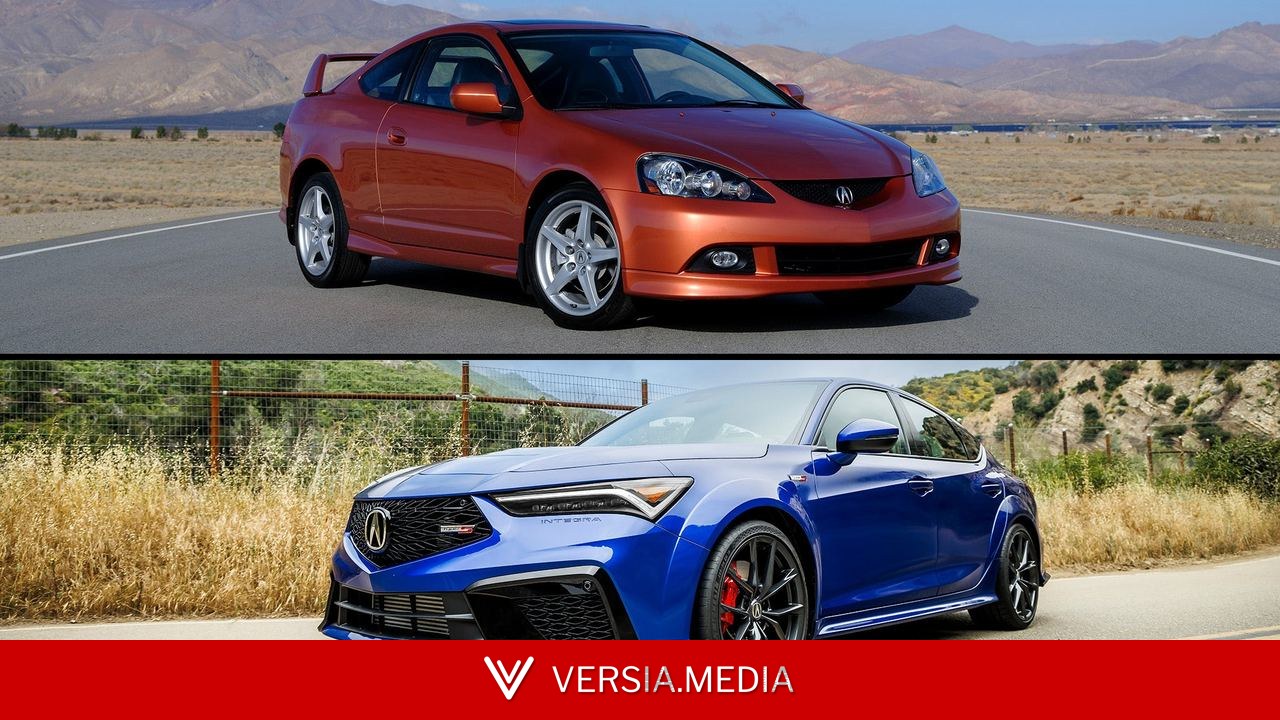
The RSX Type S required effort to extract every bit of speed. The 2025 Acura Integra Type S delivers it in surges of turbocharged torque—and transforms the entire driving experience.
Save
See All 20 Photos 20
The Acura RSX was essentially an Integra in name only. Acura renamed the fourth-generation Integra for North America as part of its early-2000s transition to alphanumeric model designations, but when the original badge returned for 2023, it arrived on an entirely different vehicle. In Type S form, the contemporary Integra stands as Acura’s most potent current U.S. offering—and as we can confirm, having spent a year with our long-term 2025 Acura Integra Type S, it is a far more serious performance machine than any compact Acura Type S that came before it.
0:00 / 0:00
A great deal has evolved since Acura last placed a Type S badge on a U.S.-market compact car. That prompted us to consider how the older models compare with our Integra, at least on paper; our opportunity to test a fresh RSX Type S ended when the model was discontinued after 2006. So just how much has the front-drive luxury sport compact progressed from the RSX Type S to today’s Integra Type S?
See All 20 Photos 20
Size and Shape
The most significant difference is not horsepower, at least not at first glance. It is the format. The RSX Type S was a two-door 2+2 hatchback (much like today’s Honda Prelude), whereas the modern Integra Type S is a four-door, four-passenger hatchback. In essence, Acura’s sport compact has matured from a youthful coupe with a reasonably usable back seat into a premium daily driver that must satisfy enthusiasts without requiring them to sacrifice adult-friendly practicality. That single change speaks volumes about how Acura’s vision of a front-drive luxury sport compact has evolved.
See All 20 Photos 20
The figures make the transformation even clearer. At 186.0 inches long, 74.8 inches wide, and 55.4 inches tall, the Integra Type S is 13.6 inches longer and 6.9 inches wider than the RSX Type S, though only 0.5 inch taller. Its 107.7-inch wheelbase extends 6.5 inches beyond the RSX’s 101.2-inch span, and curb weight rises from 2,840 pounds to 3,199 pounds. Interestingly, weight distribution remains nearly unchanged: The RSX carried 63 percent of its weight over the front axle, while the Integra sits at 62 percent.
Inside, the growth mostly appears where you would anticipate: the back seat. Front headroom improves from 37.8 to 38.6 inches, while rear headroom jumps from 34.1 to 36.4 inches. Front legroom decreases slightly, from 43.1 to 42.3 inches, but rear legroom expands dramatically, from 29.2 inches in the RSX to 37.4 inches in the Integra. In other words, the old RSX was a compact coupe with occasional-use rear seats; the new Integra Type S is a genuine daily-driver performance car that can actually accommodate adults in back.
The RSX Type S was sporty, yet it remained fairly workaday in its presentation. Its coupe profile, hatchback roofline, and subtle Type S details gave it some character, but nothing about the car shouted performance the way its engine did.
See All 20 Photos 20